


Adolescent idiopathic scoliosis (AIS) is a growing global health concern. In China alone, epidemiological estimates from the Spinal Disease Prevention and Control Committee of the Chinese Preventive Medicine Association suggest that over 5 million children and adolescents are affected, with approximately 300,000 additional cases reported each year.
However, conventional orthosis fabrication using plaster casting cannot keep pace with the rapidly growing demand for personalized orthotic care. The market urgently needs a new approach that delivers greater precision and efficiency.
01 | Greater Precision, Efficiency, and Comfort: A Milestone in the Digital Transformation of Spinal Rehabilitation
The 3D-printed spinal orthosis independently developed by PioCreat has recently received a Class II Medical Device Registration Certificate from the Beijing Municipal Medical Products Administration. This marks another important step in the digital transformation of spinal rehabilitation. PioCreat also obtained a Medical Device Manufacturing License at the same time (Registration No.: Beijing MPA 20262190209).
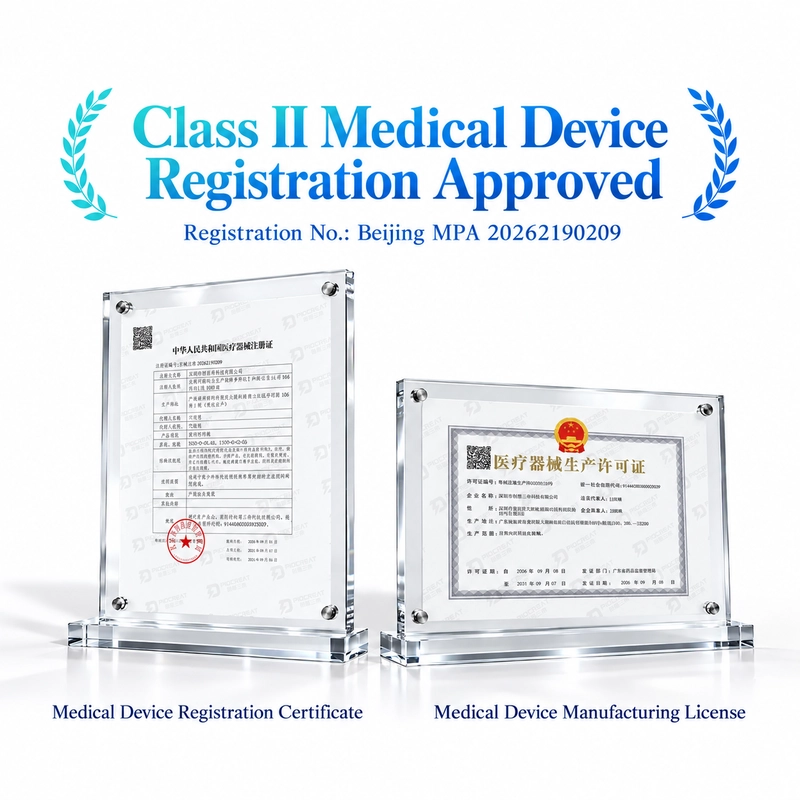
Using customized 3D-printing technology, the product combines digital design with personalized manufacturing to create orthoses tailored to each patient’s body shape. It is intended to correct deformities or prevent their progression in patients with adolescent idiopathic scoliosis. PioCreat is listed as the entrusted manufacturer for the registered device and has also received a license to manufacture Class II medical devices, achieving regulatory compliance throughout the process.
These approvals mark further progress toward the standardized application and industrial-scale adoption of 3D printing in spinal orthotics.
The growing need for adolescent scoliosis intervention is driving continued demand for orthoses.
Recent public health initiatives and standardized screening programs have made spinal assessment a key component of annual health examinations for students aged 10–16. A more standardized screening and assessment system will also generate substantial additional demand for intervention.
As market conditions change, conventional, loosely standardized fabrication methods can no longer meet the need for precise, personalized adolescent spinal intervention at scale. The industry needs a fundamental transformation of its production methods and an expansion of capacity through digital technology.
02 | What Does Digital Transformation Bring to the Spinal Orthotics Market?
China’s spinal orthotics industry has long relied heavily on traditional manual plaster-based fabrication, with the entire process dependent on the experience of skilled technicians. This approach presents numerous challenges, including high labor costs, long production cycles, inconsistent fitting accuracy, substantial storage requirements, and a poor patient experience.
Following several years of dedicated research and development, PioCreat has introduced its 3D-printed spinal orthosis, a customized scoliosis brace produced through a digital workflow. Its digital approach enables accurate fitting, comfortable wear, and personalized adjustments, offering a new experience in adolescent spinal orthotic care.
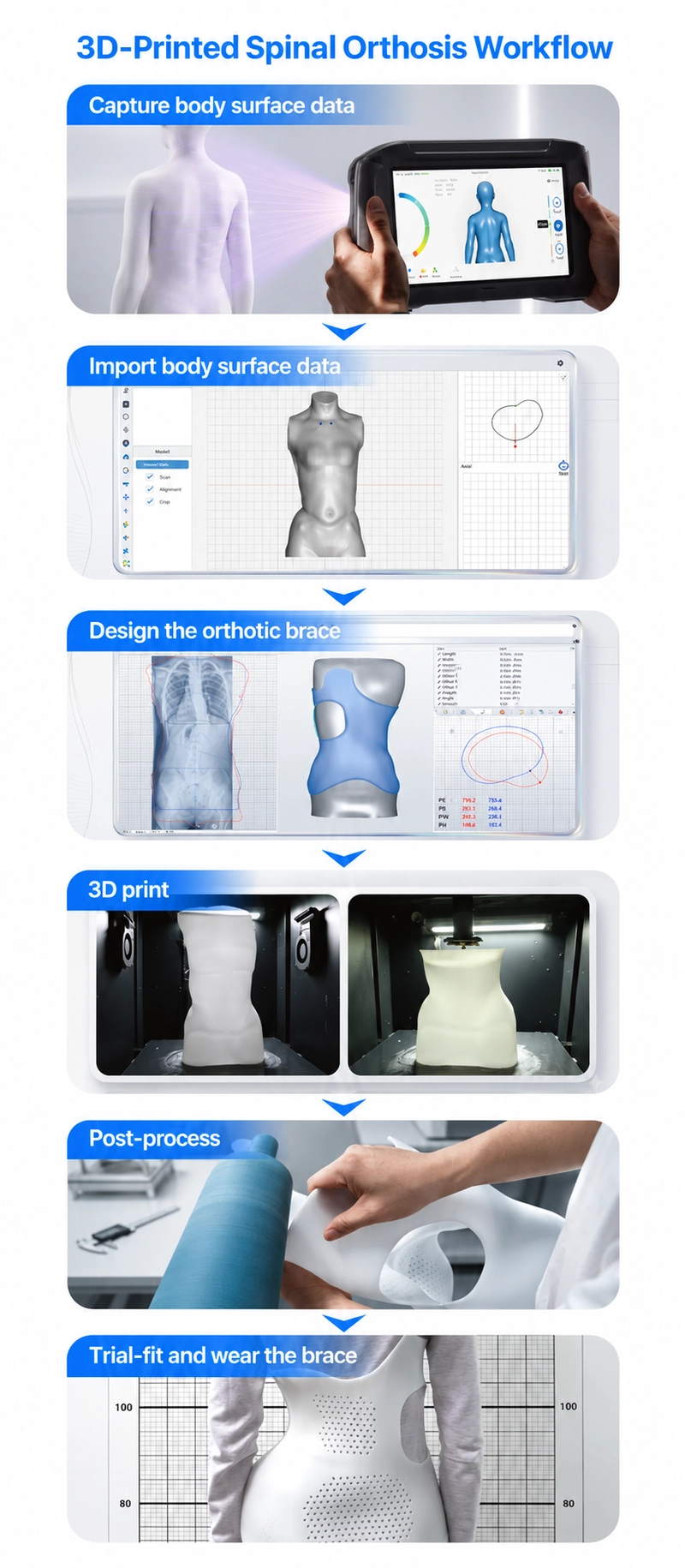 |
Workflow labels 1. Capture body surface data 2. Import body surface data 3. Design the orthotic brace 4. 3D print 5. Post-process 6. Trial-fit and wear the brace |
Reducing Reliance on Manual Labor and Transforming Production
Conventional scoliosis orthosis fabrication involves multiple stages, including plaster casting, positive model fabrication, and manual model modification. These steps require considerable technical experience and labor. The patient’s positive model must also be retained for later adjustments or remanufacturing. Plaster positive models are heavy, take up considerable space during long-term storage, and increase management costs when they eventually require disposal.
PioCreat’s digital solution captures the patient’s body surface data through 3D scanning, replacing physical positive models with digital models and reducing the need for positive model fabrication, storage, and manual modification. By combining digital design with 3D printing, fabrication shifts from manual work to data-driven, equipment-based production. Compared with conventional methods, this approach can reduce production space requirements by approximately 70%, depending on the production setup, while also reducing material waste. It also eliminates the need to fabricate and dispose of foam positive models, making production more efficient and environmentally friendly.
Contactless Data Capture for an Adolescent-Friendly Care Experience
The conventional method requires the patient’s body to be wrapped in plastic film before plaster casting, with the patient maintaining a fixed standing position for approximately 30 minutes. During plaster bandage casting, the patient must bear the weight of the plaster. This can be particularly uncomfortable for adolescents who need orthoses made repeatedly.
The digital solution uses the Creality Sermoon P1 3D scanner for contactless capture of body data. A typical scan can be completed in approximately one minute or less, depending on the patient and scanning conditions, without plaster wrapping or the need to remain in a fixed position for an extended period. Digital data capture reduces discomfort during the measurement process, creating a more comfortable, patient-friendly experience.
Digital Design for Precise, Personalized Fitting
In conventional orthosis fabrication, technicians modify models manually based on their experience. This introduces considerable variability, makes revisions and adjustments complex, and creates waste shavings and discarded models that are difficult to manage.
The digital solution uses each patient’s 3D data as the basis for design. It allows personalized adjustments to suit individual body characteristics and requirements, enabling a more precise fit. Digital design and manufacturing significantly reduce the costs of reworking and repeated adjustments.
03 | An Integrated Solution: PioCreat Charts a New Path for Spinal Rehabilitation
PioCreat specializes in 3D-printing solutions for prosthetics, orthotics, and personalized rehabilitation and wellness products. Its applications include scoliosis orthoses, prosthetic sockets and protective covers, custom insoles, and custom pillows. The company provides customers with integrated digital services spanning body data capture, AI-powered design, and 3D-printing printing.
For spinal orthotics, PioCreat has developed an integrated 3D-printing solution for scoliosis orthoses that covers data capture, digital design, intelligent manufacturing, and finished-product delivery. Digital technology upgrades conventional orthosis fabrication workflows while helping healthcare institutions establish standardized, practical, and highly competitive adolescent scoliosis care services.
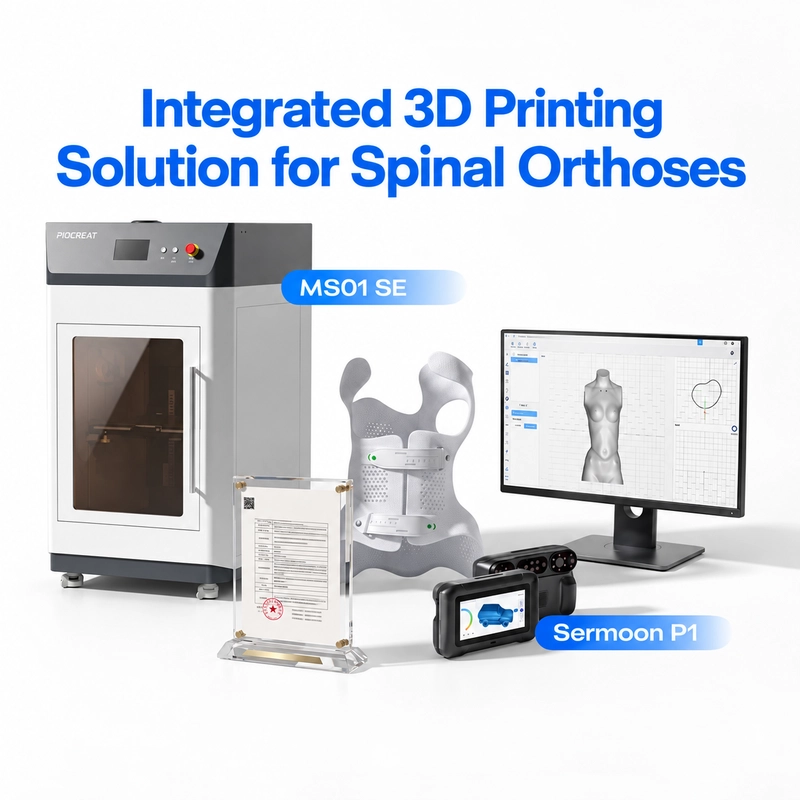
The key components include:
1. Creality Sermoon P1 3D Scanner
Infrared structured light rapidly captures data for a model of the patient’s body, enabling contactless digital data acquisition. Compared with conventional plaster casting, 3D scanning is easy to learn and use without prior experience, causes less patient discomfort, and improves data capture efficiency. It provides an accurate data foundation for subsequent personalized orthosis design.

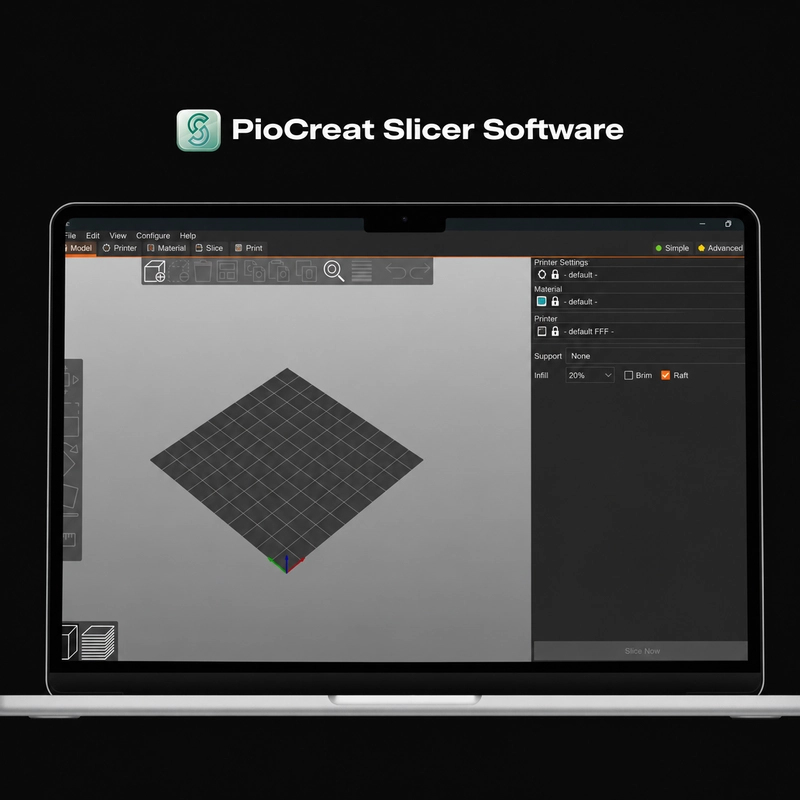
2. PioCreat Slicer Software
As a key link between the digital model and 3D printing, the software supports model import, print parameter configuration, and generation of print-ready sliced files, providing reliable data for 3D printing and production.
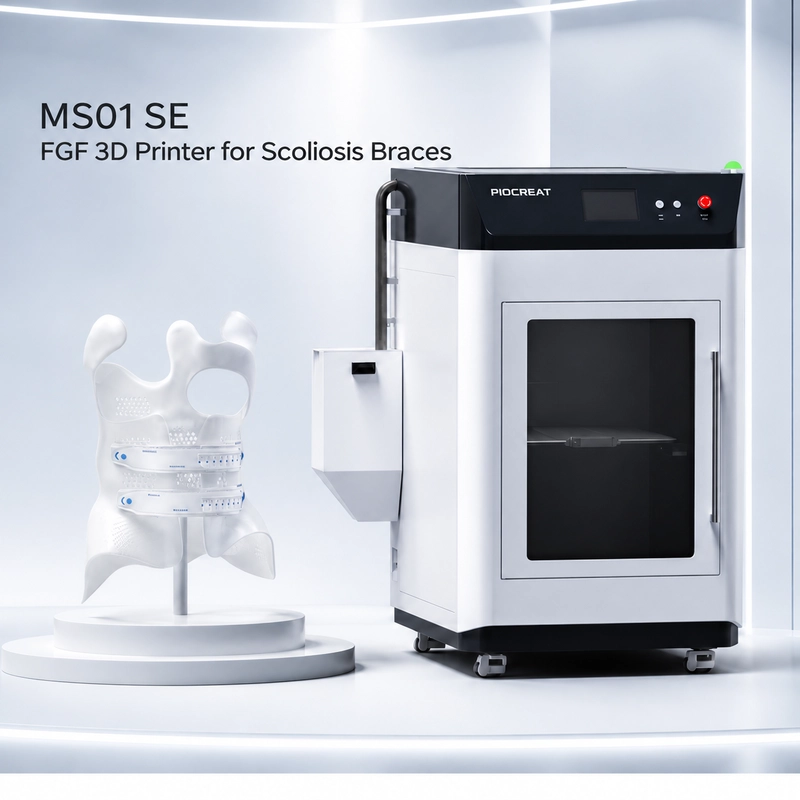
3. MS01 SE FGF 3D Printer for Scoliosis Braces
Designed for large-format scoliosis brace production, the MS01 SE uses fused granulate fabrication (FGF), a pellet extrusion process, to support high-efficiency 3D printing. Its maximum build volume of 500 × 500 × 650 mm accommodates various types of spinal orthoses. Depending on brace geometry, material, and print settings, printing a single orthosis typically takes approximately 4–8 hours. Multiple printers can operate simultaneously, enabling rapid production from a digital model to a personalized orthosis.
The solution connects the entire workflow, from patient data capture to scoliosis brace delivery: Patient assessment → 3D scanning → Digital design → Slicing → 3D printing → Post-processing → Delivery.
A physician assesses the patient using imaging and clinical findings, while the Creality Sermoon P1 3D scanner rapidly captures body surface data to generate a digital body model. The orthosis is then designed using the patient’s body data and orthotic requirements, providing a personalized fit tailored to the patient’s body shape. The completed digital design is imported into PioCreat Slicer for slicing, and the orthosis is manufactured using the MS01 SE 3D printer. Post-processing—including trimming, sanding, and assembly—completes the customized spinal orthosis. The material can be thermoformed again, allowing straightforward fit adjustments.
The digital transformation of spinal rehabilitation is underway, and PioCreat’s integrated 3D-printing solution offers a practical model for the industry’s transition. Ultimately, the value of technology lies in the people it serves. Looking ahead, PioCreat will work with industry partners to advance standardization in spinal orthotics, using innovation to help young people stand tall and build their futures.
This article is intended for healthcare professionals, orthotics and prosthetics professionals, medical device industry partners, and other professional audiences. It is not directed at the general public. The medical device registration and manufacturing authorization described in this article apply to China only. Product availability, regulatory status, and permitted uses may vary by country or region.
About PioCreat
Shenzhen PioCreat 3D Technology Co., Ltd. is a wholly owned subsidiary of Shenzhen Creality 3D Technology Co., Ltd. The company focuses on professional 3D-printing solutions for dental, prosthetics and orthotics, rehabilitation, and other specialized applications. By integrating 3D scanning, digital design, slicing software, and additive manufacturing technologies, PioCreat supports digital workflows for dental clinics, dental laboratories, orthotics and prosthetics providers, rehabilitation institutions, and other professional organizations. Its solutions are designed to improve production efficiency, customization capabilities, and workflow scalability across clinical and digital manufacturing applications.